
A thermal protector for curtain motors prevents burnout by detecting heat near the winding or motor casing and interrupting the circuit when the temperature reaches its calibrated trip point. Once the bimetal element cools to its reset temperature, the contacts close and restore power. While it cannot correct mechanical problems such as track friction or excessive curtain loads, it helps prevent overheating from damaging the motor winding insulation and causing electrical failure or costly service callbacks.
Why Curtain Motors Burn Out and How a Thermal Protector Prevents It
Curtain motors rarely fail simply because they are undersized. More often, heat builds faster than the motor housing can dissipate it, causing winding temperatures to approach the insulation system’s thermal limit. A thermal protector for curtain motors must therefore be selected based on winding temperature and heat transfer conditions, not just average casing temperature.
The Three Main Causes of Motor Overheating
The first cause is a locked rotor or excessive mechanical load. A tight track bend, heavy blackout curtain, or misaligned carrier can prevent the motor from rotating. Current may rise sharply while rotation-related cooling stops, causing winding temperature to increase rapidly.
The second cause is repeated operation with insufficient cooling time. Many AC tubular curtain motors are designed for short-time operation, with some models rated for approximately four minutes of continuous running. During commissioning, repeated runs to adjust travel limits can cause heat to accumulate if rest periods are too short. Actual operating and cooling requirements depend on the motor manufacturer’s specifications.
The third cause is increased friction in aging motors. Worn bearings or deteriorating lubrication increase mechanical resistance, potentially raising current consumption and operating temperature. More frequent thermal trips may therefore indicate a developing mechanical problem rather than a defective protector.
Incorrect selection or installation can also compromise protection. A trip temperature that is too high or a mounting position too far from the winding hot spot may delay circuit interruption until the insulation is already at risk. A thermal protector for curtain motors must therefore provide reliable temperature sensing, appropriate trip characteristics, and sufficient electrical cycle life.
What a Thermal Protector Must Detect
Table 1 summarizes common overheating conditions and the corresponding thermal protection requirements. It provides a reference for OEM engineers selecting a thermal protector for curtain motor applications, although actual performance must be verified through motor-level testing.
Table 1. Common Motor Overheating Conditions and Thermal Protection Requirements
| Overheating condition | Thermal effect | Protector response | Why it matters |
|---|---|---|---|
| Locked rotor or stalled motor | Current rises and winding temperature increases rapidly | The bimetal disc opens the contacts at its calibrated trip temperature | Prevents excessive winding temperature rise |
| Repeated short cycles | Heat accumulates when cooling periods are insufficient | The protector opens at the trip point and resets after cooling | Helps prevent cumulative overheating |
| Bearing wear and increased friction | Higher mechanical resistance can increase current and operating temperature | More frequent trips can indicate increased mechanical load | Signals a potential maintenance requirement |
| Incorrect trip temperature | An excessively high set point delays thermal protection | The winding may exceed its allowable temperature before circuit interruption | Selection must account for insulation class and winding hot spots |
A thermal protector for curtain motors should be evaluated by its ability to interrupt the circuit before excessive heat damages the winding. Trip temperature, response time, mounting position, and reset characteristics should all be verified under actual motor operating conditions.
Inside the Bimetal Switch and How It Prevents Motor Overheating
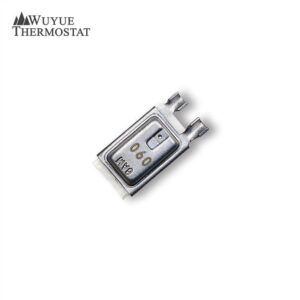
The working element in a thermal protector for curtain motors is typically a snap-action bimetallic disc. When heat transfers to the disc and reaches its calibrated trip temperature, the disc snaps over center and opens the electrical contacts, interrupting the motor circuit. Once it cools to the reset temperature, the contacts close again, restoring power.
Three factors determine how effectively this mechanism protects the motor: sensing position, temperature tolerance, and electrical endurance.
Direct Sensing Improves Thermal Response
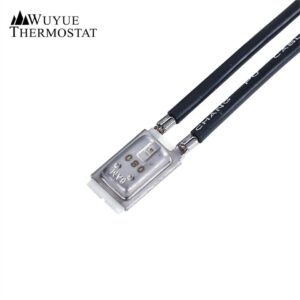
A protector mounted close to the motor winding can detect rising temperatures sooner than one installed on the outer casing. The 6AM series features an ultra-thin, micro-size design that allows installation in compact curtain motor housings, making it easier to position the device near the heat source.
When direct mounting is not possible, the thermal lag between the winding and the protector must be evaluated through testing. Mounting location and thermal coupling directly affect how quickly the contacts open during an overload.
Temperature Tolerance, Cycle Life, and Electrical Ratings
Temperature tolerance determines how consistently a thermal protector operates around its specified trip point. The 6AM series offers ±3°C and ±5°C tolerance options across its 50°C to 180°C operating range, depending on the selected specification. Tighter tolerance helps OEM engineers control temperature variation and reduce the risk of premature or delayed tripping.
Cycle life is equally important for curtain motor applications involving repeated operation. The 6AM series is rated for more than 100,000 operating cycles. This specification is relevant to motors that experience repeated thermal trips during commissioning or heavy-use periods. Actual endurance should be evaluated under the specified electrical load and test conditions to confirm long-term contact reliability.
Electrical ratings must also match the motor circuit. The 6AM series offers 8A ratings at 127V AC and 250V AC, and 10A ratings at 12V DC and 24V DC. OEM engineers should verify the applicable voltage and current combination, switching load, and contact requirements rather than selecting a protector based on its maximum rating alone.
The bimetal protection cycle can be summarized in four steps:
- Normal operation: The contacts remain closed while the motor operates within its thermal limits.
- Overload or stall: Rising temperature causes the bimetal disc to reach its trip point and open the contacts.
- Cooling: The motor stops, allowing the protector to cool toward its reset temperature.
- Automatic reset: The contacts close again. If the underlying overload remains, repeated tripping may occur.
Repeated trips should prompt an inspection of motor load, duty cycle, supply conditions, and mechanical resistance. Installing a higher-temperature protector without identifying the cause can compromise winding protection.
What Separates a Reliable Thermal Protector from a Costly Weak Point
Two thermal protectors with the same nominal trip temperature may perform differently because of variations in tolerance, cycle life, package size, and electrical ratings. For OEM procurement, these specifications should be evaluated together rather than comparing products by price alone.
Key Specifications for Thermal Protector Selection
Table 2 summarizes the main 6AM specifications and explains their relevance to curtain motor protection.
Table 2. 6AM Thermal Protector Specifications and Their Application Benefits
| Specification | 6AM series | Importance for curtain motors |
|---|---|---|
| Operating temperature range | 50°C to 180°C | Provides selectable trip temperature options for different motor designs |
| Temperature tolerance | ±3°C or ±5°C | Helps control trip-point variation |
| Rated cycle life | More than 100,000 cycles | Supports repeated thermal protection and reset operations |
| Package design | Ultra-thin, micro-size | Facilitates installation in compact motor housings |
| Certifications | CQC and UL recognition, subject to applicable model and rating | Supports safety documentation and market access |
| Electrical ratings | 8A at 127V AC and 250V AC; 10A at 12V DC and 24V DC | Provides options for different motor circuit requirements |
Certification and Installation Considerations
Certification is an important part of thermal protector procurement. CQC and UL recognition can support product qualification and safety documentation, but buyers should verify the applicable certificate, model, and electrical ratings before approving a component. For thermal motor protectors, IEC 60730-2-22 is a relevant international standard to consider when determining applicable safety requirements.
Package size also affects installation flexibility. The compact 6AM design allows closer positioning to the winding in narrow tubular motor housings. However, actual response time depends on mounting method, thermal contact, and surrounding materials. OEM engineers should validate these factors through temperature-rise and overload testing in the complete motor assembly.
Matching Trip Temperature and Response Speed to Curtain Motor Duty Cycles
Selecting a Thermal Protector for Curtain Motor applications requires matching its trip temperature and response characteristics to the motor’s insulation system and operating conditions. The key question is how much thermal margin remains between the winding hot spot and the insulation system’s allowable temperature limit.
Start with the Insulation System, Not a Catalog Default
Motor insulation systems are classified by thermal class. Common examples include Class B, Class F, and Class H, with maximum temperature ratings of 130°C, 155°C, and 180°C, respectively. These ratings represent the thermal limits of the insulation systems under specified conditions; they should not be treated as interchangeable protector trip temperatures.
The appropriate trip point for a Thermal Protector for Curtain Motor depends on winding temperature, hot-spot location, protector mounting position, thermal response delay, and the motor’s expected service life. A protector set at 130°C may be suitable for one design but inappropriate for another. OEM engineers must establish the allowable winding temperature and reserve sufficient margin for the protector to respond before insulation damage occurs.
Thermal cut-outs in tubular curtain motors may use different trip temperatures depending on motor design and insulation requirements. A casing that feels unusually hot or repeated thermal trips can indicate excessive heat, but neither provides a reliable measurement of winding temperature. The actual trip point should be determined through temperature-rise and overload testing.
Choosing a Thermal Protector for Curtain Motor applications based only on a catalog default is therefore inadequate. The set point must be validated against the motor’s insulation limits and actual thermal behavior.
Duty Cycle and Thermal Response Time
Trip temperature is only one part of selecting a Thermal Protector for Curtain Motor systems. Response time also matters: a protector that reacts too slowly may allow the winding hot spot to exceed its allowable limit, while one with insufficient temperature tolerance may cause nuisance trips during normal operation. The selected protector should provide an appropriate combination of trip-point accuracy and thermal response, verified through locked-rotor and repeated-operation tests.
Many AC tubular curtain motors are designed for short-time operation, and some models specify approximately four minutes of continuous running. Required cooling periods vary by motor design and manufacturer. DC curtain motors also require thermal protection because stalled operation, excessive loads, or restricted movement can cause overheating.
A thermal protector does not replace the motor’s duty-cycle requirements. It provides additional protection when operating conditions cause the winding temperature to approach its thermal limit.
A common selection mistake is to base the trip point on normal running temperature alone. Under locked-rotor conditions, winding temperature can rise much faster because the motor is no longer rotating and normal operating conditions have changed. The correct approach is to measure the winding temperature profile during abnormal operating tests and confirm that the Thermal Protector for Curtain Motor interrupts the circuit before the allowable limit is exceeded.
Field Scenarios Where Thermal Protection Helps Prevent Damage
A Thermal Protector for Curtain Motor applications provides an important safety function when actual installation conditions differ from expected operating conditions. The following scenarios illustrate why correct selection and installation matter.
Commissioning, Heavy Curtains, Voltage Variations, and Aging Motors
Commissioning and repeated limit setting: During installation, technicians may run a curtain motor repeatedly to adjust its travel limits. Short pauses between runs can cause heat to accumulate, particularly in motors designed for short-time operation. A thermal protector interrupts the circuit if the temperature reaches its trip point, helping prevent excessive winding heat. Technicians should still follow the motor manufacturer’s specified operating and cooling periods.
Heavy curtains and excessive mechanical load: A heavy blackout curtain or a misaligned track can increase the torque required from the motor. Higher mechanical resistance may increase current consumption and operating temperature. If thermal trips occur repeatedly, the load, motor sizing, and track alignment should be checked rather than replacing the protector with one having a higher trip temperature.
Voltage variations: Supply voltage changes can affect motor current and temperature, but the effect depends on the motor and its control system. In multi-motor installations, engineers should evaluate the actual voltage conditions and motor behavior under simultaneous starting or other demanding operating conditions. Protector selection should be based on measured winding temperatures rather than assuming that every voltage drop produces the same current increase.
Aging motors and increased friction: Worn bearings or deteriorating lubrication can increase mechanical resistance and operating temperature. More frequent thermal trips may indicate a developing maintenance issue. Servicing the mechanism or replacing the motor is preferable to installing a higher-temperature protector that could allow excessive winding temperatures.
These scenarios share one principle: a Thermal Protector for Curtain Motor systems helps limit overheating but does not correct the underlying mechanical or electrical problem. Its effectiveness depends on appropriate trip temperature, tolerance, mounting position, response characteristics, and cycle life.
How to Specify Thermal Protection Without Over- or Under-Protecting
Selecting a Thermal Protector for Curtain Motor platforms requires a structured engineering process. The following checklist helps OEM engineers and maintenance teams evaluate the motor, operating conditions, and protection requirements before choosing a component.
A Practical Checklist for OEM and Maintenance Teams
-
Identify the insulation limit. Confirm the winding insulation class and its applicable temperature limit. Select a protector trip point that allows sufficient margin for winding hot spots and thermal response delay.
-
Measure the locked-rotor thermal profile. Conduct controlled overload testing with temperature sensors positioned at relevant winding locations. Record the temperature rise and determine how quickly protection must respond.
-
Confirm the duty cycle. Check the motor manufacturer’s continuous running time and required cooling period. Do not apply a general four-minute operating limit or a fixed cooling interval to every AC tubular motor.
-
Evaluate package size and mounting position. Choose a thermal protector that fits the motor housing and can achieve reliable thermal contact near the relevant heat source.
-
Check temperature tolerance. Compare the protector’s tolerance with the required trip point and the risk of nuisance tripping. Tighter tolerance can improve consistency, but the final set point must still preserve adequate thermal margin.
-
Assess cycle life. Estimate the expected number of thermal trips during commissioning and normal service. Confirm that the protector’s rated cycle life is suitable for the intended electrical load and operating conditions.
-
Verify certification scope. Check the applicable CQC or UL certification records, including model numbers and electrical ratings, against the requirements of the target market.
-
Test the complete motor assembly. Validate trip temperature, response time, reset behavior, and electrical endurance in the actual motor configuration. Thermal performance in a standalone bench test may differ from performance after installation.
Conclusion and Next Step
A thermal protector for curtain motor platforms helps prevent overheating by interrupting power before excessive winding temperatures cause insulation damage. Its trip temperature, tolerance, response time, mounting position, and cycle life must match the motor’s insulation system and actual duty cycle. Start with the locked-rotor thermal profile, then validate the selected protector in the complete motor assembly.
Wuyue provides the 6AM series thermal protectors for motor protection applications, with selectable temperature settings, compact designs, and multiple electrical rating options. Contact Wuyue to discuss your curtain motor requirements, request product specifications, or arrange sample testing to evaluate the right thermal protection solution for your application.