
Thermal protection can fail in two ways: it trips too late or interrupts the circuit too slowly, increasing the risk of contact damage. A Snap Action Thermal Protector addresses both concerns through its rapid bimetal disc inversion. Instead of gradually deflecting toward the open position, the disc snaps between two stable shapes, quickly separating the contacts to interrupt current flow. This action helps minimize arcing and contact erosion over repeated operating cycles. For motors, transformers, and battery-powered equipment, a properly selected snap action thermal protector provides resettable overheat protection with consistent switching performance.
What Makes Snap Action Different from Other Thermal Protection Devices?
When comparing thermal protection devices, the key question is not simply which one trips first, but how it interrupts the circuit. The operating mechanism determines how quickly contacts separate, how effectively the device limits contact damage, and how consistently it performs over repeated operating cycles. This distinction is particularly important when selecting a resettable thermal protector for motors, transformers, and other electrical equipment.
The Bimetal Disc Does Not Creep—it Snaps
A Snap Action Thermal Protector uses a bimetallic disc made of two bonded metals with different thermal expansion coefficients. As temperature rises, the disc develops mechanical stress. Once it reaches its calibrated trip temperature, the disc rapidly snaps from one stable curvature to the opposite position, separating the electrical contacts and interrupting current flow.
The contact separation occurs very rapidly. Technical literature on bimetal thermostats describes snap mechanisms capable of completing this movement in less than 1 ms, although actual performance depends on the specific design.
This rapid separation is more than a switching advantage. It helps minimize arcing by quickly increasing the distance between the contacts. In contrast, gradual contact separation can allow an electrical arc to persist, contributing to contact erosion and potentially affecting switching performance over time. By using a discrete snap action rather than gradual deflection, a snap action thermal protector helps reduce this risk and maintain more consistent operation over its rated service life.
Why Auto-Reset Does Not Automatically Mean Long-Term Reliability
A thermal fuse permanently opens the circuit once its rated temperature is reached. A Snap Action Thermal Protector, by contrast, automatically closes its contacts again after the temperature drops below its reset threshold. This resettable operation makes it suitable for applications such as motor windings, transformer coils, and certain battery-powered assemblies where replacing a one-time cutoff after every thermal event would be impractical.
However, automatic reset alone does not guarantee long-term reliability. Repeated switching under excessive electrical loads can accelerate contact wear and affect the device’s operating characteristics. A properly selected snap action protector uses rapid contact separation to help minimize this wear and support its rated cycle life. For equipment requiring repeated thermal protection, the specified electrical load, switching frequency, and endurance rating should all be considered.
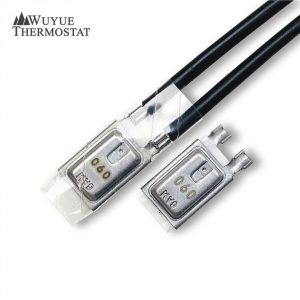
Snap Action vs. Creep Action: Key Differences in Thermal Protection
The difference between snap action and creep action is not merely a matter of switching speed. It affects how a thermostat responds to temperature changes and whether its operating characteristics are suitable for a particular safety application.
Creep action thermostats use gradual bimetal deflection to make and break electrical contacts. This behavior can be useful in temperature regulation applications, such as heating pads and warming products, where controlled temperature cycling is required. However, gradual contact separation may increase the risk of sustained arcing under certain electrical loads.
According to the relevant 6AM product information, snap action and creep action thermostats have different intended applications. However, their acceptance and certification requirements depend on the product category, electrical ratings, and target market. Manufacturers should verify the applicable UL, CSA, EN, or IEC requirements before selecting a thermostat for a specific application.
A Snap Action Thermal Protector is designed for rapid circuit interruption at a defined temperature, making it suitable for resettable overheat protection where decisive contact separation and repeatable operation are required. The appropriate device still depends on the electrical load, thermal conditions, and applicable safety requirements.
Table 1. Comparison of Thermal Protection Devices by Operating Principle
| Protection type | Reset behavior | Contact break mechanism | Temperature characteristics | Typical applications |
|---|---|---|---|---|
| Snap action thermal protector | Automatic reset after cooling | Rapid bimetal disc inversion and contact separation | Commonly ±3°C or ±5°C, depending on grade | Motor, transformer, and equipment overheat protection |
| Creep action thermostat | Automatic reset | Gradual bimetal deflection and contact movement | Depends on design and differential | Temperature regulation in heating pads and warming products |
| Thermal fuse | One-time, non-resettable | Fusible alloy or thermal element melts | Depends on rated operating temperature and tolerance | Permanent thermal cutoff and backup protection |
| PTC thermistor | Self-resetting resistance response | No mechanical contact separation; resistance increases as temperature rises | Depends on material formulation and design | Inrush current limiting and overcurrent protection |
The table is a selection guide rather than a product ranking. A snap action thermal protector is particularly relevant when an application requires automatic reset, rapid contact separation, and a defined operating temperature.
Where a Snap Action Thermal Protector Is Used in Real Equipment
Snap action thermal protection is particularly valuable in equipment where internal heat can accumulate faster than the cooling system can dissipate it. Motors, transformers, and battery-powered equipment may experience localized temperature increases during overload, restricted operation, or abnormal operating conditions. A properly specified thermal protector helps interrupt the circuit before excessive heat causes permanent component damage.
Motor Stall and Winding Protection
When a motor stalls, it may continue drawing excessive current without producing useful mechanical output. This can cause winding temperature to rise rapidly. A Snap Action Thermal Protector installed within or near the motor winding can respond to the local temperature increase rather than relying solely on ambient temperature or current sensing. When its calibrated trip temperature is reached, it interrupts the circuit to help protect the winding insulation.
The trip temperature should be selected according to the motor’s insulation class and actual operating conditions. Common thermal classes include Class B at 130°C, Class F at 155°C, and Class H at 180°C. These values represent insulation thermal class limits, not recommended thermal protector trip settings. Selection must also account for winding temperature rise, hot spots, ambient temperature, and thermal coupling between the winding and protector.
A properly matched motor thermal protector can disconnect the motor during a stall or overload-related temperature rise and automatically restore operation after cooling, provided that no permanent damage has occurred and the operating conditions permit resetting.
Transformer and Ballast Protection
Transformers and lighting ballasts operate under continuous electrical and thermal loads. A conventional current-only breaker may not respond to a localized winding hot spot if the total circuit current remains below its trip threshold. A Snap Action Thermal Protector installed in thermal contact with the winding can provide additional temperature-based protection by responding to heat generated within the component.
The 6AM series and comparable bimetal thermal protectors are used in applications including transformers, fluorescent ballasts, and HID lighting ballasts. Proper installation is important: the protector must maintain suitable thermal contact with the component being monitored so that its trip response reflects the actual operating temperature.
Battery Pack and Charger Protection
Battery packs can generate heat during charging, discharging, or abnormal operating conditions. A thermal fuse may provide permanent cutoff in applications where a one-time disconnection is preferred. In some battery-powered equipment, a resettable thermal protector can provide an additional temperature-responsive cutoff when its operating characteristics are compatible with the battery chemistry and protection design.
A Snap Action Thermal Protector installed in thermal contact with the battery cells or pack structure can interrupt the connected circuit when its specified trip temperature is reached. Unlike a PTC thermistor, which increases resistance to limit current, a mechanical thermal protector physically separates its contacts to interrupt the current path.
In some designs, PTC devices and snap action thermal protectors are used together. The PTC provides current-limiting behavior, while the thermal protector provides a separate temperature-triggered switching function. Neither should replace the primary battery protection functions required by the overall safety design.
Snap Action Thermal Protector Applications: Curtain Motors and Graphene Heating Pads
The 6AM series lists curtain motors and graphene heating pads among its intended applications. These examples demonstrate how a compact bimetal thermal protector can serve different equipment designs.
A curtain motor typically operates in a confined housing where a stalled motor or mechanical obstruction may cause internal temperatures to rise. A miniature thermal protector can be installed near the motor’s heat-generating components without occupying excessive space.
Graphene heating pads require temperature protection appropriate to their heating element, surface temperature limits, and control system. A correctly calibrated snap action thermostat can provide an additional thermal cutoff while allowing automatic reset after cooling.
In both applications, reliable performance depends on selecting the correct trip temperature, electrical rating, and mounting position. The operating principle remains the same, but the calibration and thermal coupling must match the equipment design.
Size, Temperature Tolerance, and the Cost of Precision
A common procurement question is why miniature snap action thermal protectors and models with lower temperature ratings may cost more than standard versions. The difference can reflect manufacturing requirements, including bimetal material selection, contact geometry, tooling, and temperature calibration.
Smaller protectors require tighter dimensional control and precise assembly of their internal components. Low-temperature models may also require different material combinations and additional calibration or testing procedures. These factors can affect production yield and manufacturing costs. For engineers and purchasing teams, comparing a thermal protector’s price should therefore involve more than its nominal trip temperature: dimensional requirements, electrical ratings, tolerance, and verified service life also matter.
Table 2. 6AM Snap Action Thermal Protector Specifications
| Parameter | Specification context |
|---|---|
| Operating temperature range | 50°C–180°C across the platform; available configurations vary, with some listings covering 80°C–170°C in 5°C increments |
| Temperature tolerance | ±3°C or ±5°C, depending on grade |
| AC electrical rating | 8A at 127V/250V AC |
| DC electrical rating | 10A at 12V/24V DC |
| Rated life | More than 100,000 cycles, subject to specified test conditions |
| Form factor | Ultra-thin, miniature design; a representative 6AM model measures approximately 28 × 10.2 × 7.2 mm |
| Action type | Bimetal snap action, automatic reset |
| Certifications | CQC and UL listings; other 6AM variants may carry UL, cUL, TÜV, VDE, KC, or CB recognition |
| Representative applications | Graphene heating pads, curtain motors, transformers, motors, and lighting ballasts |
Why a Micro Form Factor Is an Engineering Advantage
In compact electrical equipment, installation space is often limited. A miniature Snap Action Thermal Protector can be positioned close to a motor winding, heating element, or other heat-generating component, helping reduce thermal lag compared with a remotely mounted device. The ultra-thin 6AM design is intended for applications where a compact, resettable thermal protection component is required without occupying excessive internal space.
Specifying for Reliability: What to Verify Before You Commit
A Snap Action Thermal Protector is only as reliable as its match to the electrical load and thermal environment. Datasheet values matter, but they should be evaluated together rather than in isolation.
Trip Point Is a Band, Not a Single Number
A protector rated to open at 120°C with a ±5°C tolerance may trip between 115°C and 125°C. This range must remain below the protected equipment’s allowable temperature, with sufficient margin for normal operating variations. If the normal operating temperature approaches the lower end of the trip band, nuisance trips may occur. If the band is too close to the equipment’s thermal limit, the protector may respond too late. This selection principle applies to motor windings, transformer coils, and battery packs.
Current Rating and Contact Life Are Linked
The electrical rating defines the load conditions under which the protector is designed and tested to operate. Its rated cycle life is meaningful only when considered alongside the specified voltage, current, power factor or load type, and switching conditions. Repeated switching near the rated electrical load may accelerate contact wear, particularly in high-cycling applications. The snap action mechanism helps reduce arcing during contact separation, but it does not eliminate the relationship between electrical load and service life. Always check the endurance test conditions before comparing models.
Mounting and Thermal Coupling Are Part of the Protection Design
A thermal protector responds to the temperature transferred from its mounting location, not necessarily the hottest point in the equipment. Loose installation, air gaps, or poorly selected potting materials can delay heat transfer and affect the actual trip response. During incoming inspection, follow the manufacturer’s test procedure for thermocouple placement, airflow, and test current. These conditions should be controlled so the test setup does not distort the measurement. The same principle applies during final assembly: proper thermal coupling helps a Snap Action Thermal Protector respond to the temperature of the component it is intended to protect, rather than relying mainly on enclosure air temperature.
FAQ
Q: What Is the Difference Between a Snap Action Thermal Protector and a Thermal Fuse?
A thermal fuse opens permanently when its rated operating temperature is reached. A Snap Action Thermal Protector automatically resets after cooling below its reset temperature, making it suitable for applications requiring repeated thermal protection.
Q: Can a Snap Action Thermal Protector Be Used for Temperature Regulation?
It can switch at a defined temperature, but it is primarily designed for overheat protection. A creep action thermostat may be more suitable for applications requiring gradual switching behavior or specific temperature regulation characteristics.
Q: Why Does the 6AM Series List Both AC and DC Ratings?
AC and DC loads have different contact and arc characteristics. The 6AM series offers ratings for both types of circuits, but the applicable voltage and current limits must be checked for each model and load condition.
Q: How Should I Test Incoming Shipments of Snap Action Thermal Protectors?
Use a controlled temperature test based on the manufacturer’s inspection procedure. Verify thermocouple placement, airflow, and test current, then confirm that each Snap Action Thermal Protector trips within its specified temperature tolerance. Application-level testing may also be required.
Q: Is a Higher-Priced Low-Temperature Protector More Reliable?
Not necessarily. Low-temperature models may require different materials, calibration processes, or tighter manufacturing controls. However, reliability depends on correct temperature selection, electrical load, and mounting. A properly matched standard-temperature model may outperform an unsuitable premium unit.
Conclusion
Reliable overheat protection starts with selecting the right operating principle. A Snap Action Thermal Protector provides rapid, automatic-reset circuit interruption at a defined temperature, making it a practical choice for motors, transformers, battery packs, and compact heating assemblies. The 6AM series offers multiple temperature and tolerance options in a compact design, with model-specific electrical ratings and cycle-life specifications to support different application requirements.
If you need a resettable thermal protection solution, contact Wuyue to discuss a 6AM Snap Action Thermal Protector matched to your trip temperature, electrical load, and installation requirements. Request a sample and evaluate its performance in your application before moving to production.